
Can You Put an Area Rug on Top of Carpet?
Posted by Janice Wells on June 11, 2026
If I had a dollar for every time a client asked me this question, I could retire to a very beautiful room full of very beautiful rugs. It comes up constantly, and honestly, I love when it does. Because the answer is more interesting and more useful than most people expect.
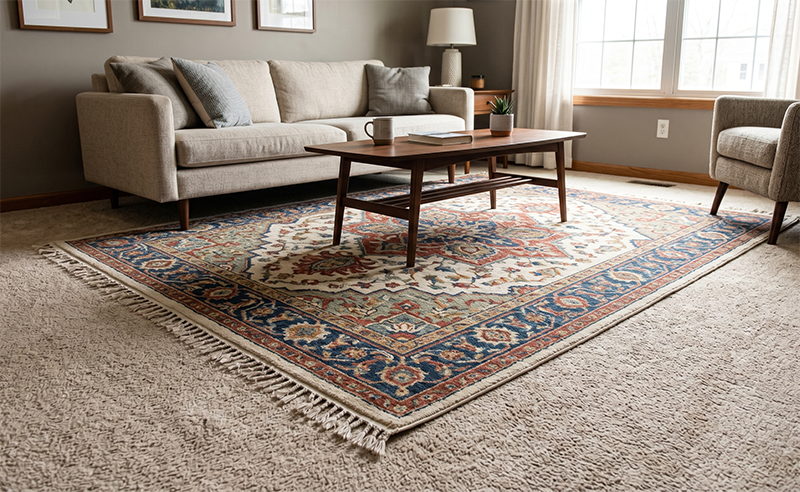
Yes, you absolutely can place an area rug on top of carpet. Interior designers do it all the time, and when it is done well, it is one of the most effective ways to define a space, add color and pattern, and bring warmth and personality to a room that is already carpeted. But there are right ways and wrong ways to do it, and a few important things to consider before you dive in.
Let me walk you through everything, including the pros, the cons, and the rug pad question that goes right along with it.
Why Would Anyone Put a Rug on Top of Carpet?
Before we get into the how, let me address the why. There are actually some very practical and very compelling reasons people layer an area rug over existing carpet and understanding them helps you decide whether this approach makes sense for your specific situation.
You are renting and cannot replace the carpet. This is one of the most common scenarios I hear. The carpet in your apartment or rental home is neutral at best and unattractive at worst. You cannot pull it out, but you can absolutely layer something beautiful over it. A well-chosen area rug transforms the space without touching what is underneath.
The existing carpet is worn but replacement is not in the budget right now. Wall-to-wall carpet replacement is a significant expense. A quality area rug placed over a worn but structurally sound carpet buys you time and makes the room look completely refreshed in the meantime.
You want to define zones in an open floor plan. Even in a fully carpeted home, an area rug on top of carpet creates visual zones. A rug anchoring your seating area in the living room, for example, pulls the furniture grouping together and gives the space a sense of intentional design that bare carpet simply cannot achieve on its own.
You love the look of layered textiles. In interior design, layering is a sophisticated technique that adds depth, dimension, and personality to a space. A patterned or textured area rug over a neutral carpet creates a richness that flat carpet alone cannot replicate.
You inherited carpet you cannot change immediately. Maybe you just moved into a home with existing carpet throughout. A carefully chosen area rug lets you start making the space feel like yours right away, even before any larger renovations happen.
You want to add warmth and sound absorption to a carpeted office. Commercial carpeting can feel cold and institutional. A beautiful area rug in a reception area, private office, or conference room elevates the professional aesthetic immediately.
The Pros of Placing an Area Rug on Carpet
Let me give you the full honest picture, starting with the genuine benefits.
It works beautifully as a design tool. When chosen thoughtfully an area rug on carpet is a legitimate and sophisticated design choice. It adds color, pattern, texture, and definition to a space. It creates visual anchors for furniture groupings and gives rooms a layered, curated quality that feels intentional and polished.
It protects the carpet underneath. High-traffic areas of carpet take a beating overtime. Placing an area rug over those zones, in front of a sofa, at a desk, in a hallway, protects the carpet underneath from wear and extends its life. When you eventually do replace the carpet, the protected areas will be in much better condition.
It allows design flexibility without permanent commitment. Wall-to-wall carpet is a fixed element. An area rug on top gives you the freedom to change your color palette, update your style, or refresh the room without any permanent alteration to what is underneath. This is especially valuable in rented spaces or in rooms you are still figuring out.
It adds an extra layer of cushioning and comfort. If your existing carpet is thin or in flat-pile, adding an area rug creates a noticeably softer, more comfortable surface under foot. In a bedroom or living room where you spend time sitting on the floor or walking barefoot, this extra layer of cushioning makes a real difference.
It helps with sound and temperature. Multiple layers of textile absorb sound even more effectively than a single layer. If noise is a concern in your space, layering an area rug over wall-to-wall carpet provides additional acoustic softening. The added textile layers also contribute to insulation, keeping the space warmer in cooler months.
It is a budget-friendly refresh. Replacing wall-to-wall carpet is a major investment in both cost and disruption. Adding a quality area rug is a fraction of the expense and can make a room look completely transformed in an afternoon and you can always take an area rug with you or recycle it in another room of the home.
The Cons of Placing an Area Rug on Carpet
Now for the honest counterpart. There are real challenges to this approach, and I would rather you know them going in.
Stability is the biggest challenge. This is the issue I hear about most often. An area rug placed on top of carpet tends to shift, bunch, and develop wrinkles over time. The soft, yielding surface of the carpet below does not grip the rug the way a hard floor does. Foot traffic pushes the rug gradually out of position, and the edges and corners can curl or buckle in ways that look untidy and create a tripping hazard, unless the proper rug pad is used to illuminate this from happening.
I will address the primary reason a rug pad is so important in this application.
An area rug can make the room feel visually heavy. Two layers of textile covering the floor can read as visually dense, particularly in a smaller room. If your existing carpet has a strong pattern or texture and your area rug does as well, the combination can feel busy and overwhelming. This is something to consider carefully at the selection stage.
Furniture legs can sink unevenly. When heavy furniture sits on an area rug that is on top of carpet, the legs sink into multiple soft layers. This can cause furniture to feel unstable, and it can create uneven pressure points on the carpet underneath over time. But we had a specific pad for this problem that we will discuss shortly.
The rug sits higher than it would on a hard floor. With both carpet and a rug pad beneath it, an area rug sits noticeably higher than it would on hardwood or tile. In doorways or transition areas, this added height can interfere with door clearance and create a raised edge that is easy to catch a foot on and cause tripping.
Cleaning is more involved. Vacuuming an area rug on carpet requires attention to both layers. Dirt and debris can work their way under the rug and into the carpet beneath. Spills that penetrate the area rug can reach the carpet underneath and are more complicated to address thoroughly.
Not every rug style translates well. Very thick, high-pile rugs, including most shag styles, are particularly difficult to layer on plush carpet because the instability is compounded by the depth of the two piles. Flatter carpet constructions for the wall to wall underneath generally work better for this application.
Do You Need a Rug Pad When Placing an Area Rug on Carpet?
Yes. Absolutely, unequivocally yes.
I know I covered rug pads in depth in a previous post, but the carpet layering application deserves its own conversation because the type of pad matters enormously here.
The pad you use under an area rug on carpet is different from the pad you use on a hard floor. On a hard floor, you need a pad with grip on both sides to anchor the rug to the smooth surface below. On carpet, you need a pad specifically designed for carpet-over-carpet use, and the distinction is important.
What kind of rug pad works on carpet?
Look for a pad that is designed to use on top of wall to wall carpeting specifically. This construction grips the carpet fibers below without damaging them. The top surface of the pad holds the area rug in place, preventing the shifting and bunching that makes rug-on-carpet so frustrating without the proper support.
Avoid rubber-backed pads designed for hard sufaces. These can grip carpet fibers in ways that cause damage and make the rug difficult to reposition. They can also cause the carpet fibers below to mat and pull over time.
A thinner pad is generally better in this application, unless you have a heavy piece of furniture being placed on top and its making the pad buckle. Because you are already adding height with the carpet layer below, a thick cushioning pad can make the rug sit too high, creating an unstable surface and potential tripping hazards around the edges. A thinner, non-slip pad such as Teebaud rug pad is designed specifically for carpet on carpeting use and gives you the grip you need without excessive height.
What does the right pad actually solve?
The right rug pad on carpet addresses almost every major complaint people have about this layering approach.
It keeps the rug in position day after day, even in high-traffic areas. It prevents the edges and corners from curling upward. It reduces the uneven sinking that furniture legs experience on multiple soft layers. It keeps the area rug from wrinkling and bunching, which is both a safety issue and an aesthetic one. And it makes the entire installation look deliberate and polished rather than improvised.
I have had countless clients tell me they tried a rug on carpet and gave up because it kept sliding everywhere. In almost every case, the problem was not the rug itself. It was the absence of the right rug pad. With the correct pad underneath, the experience is completely different.
Size your pad correctly.
Cut your pad slightly smaller than your rug on all sides, leaving about one inch of rug extending beyond the pad around the entire perimeter. This keeps the pad hidden and allows the rug edges to lie flat against the carpet below, reducing the raised-edge trip hazard.
Tips for Making Rug on Carpet Look Intentional and Beautiful
Beyond the pad, here are the design and practical guidelines I share with clients when they are planning to layer an area rug over wall-to-wall carpet.
Choose a rug with a lower, flatter pile. Flatweave rugs, low-pile contemporaries, and transitional styles with a tight construction all work beautifully in this application. They sit more stably, look more refined, and do not compound the height issue the way thick pile constructions can.
Consider the color relationship carefully. The most successful rug-on-carpet combinations involve a clear visual contrast or complement between the two layers. A patterned area rug over a solid neutral carpet. A rich, warm-toned rug over a cool gray carpet. A bold geometric over a subtle texture. When both of the layers compete for attention, the result feels chaotic. When they relate thoughtfully, it looks designed and professional.
Make sure the scale is right. In most living room applications, the area rug should still be large enough to anchor the furniture grouping properly. A rug that is too small on any floor surface looks like an afterthought, and that is especially true on carpet where the two layers are clearly visible.
Keep the existing carpet color in mind during selection. I always ask clients to share a photo of their carpeted room before we discuss rug options. The existing carpet is essentially part of the color palette you are working with and choosing a rug that harmonizes with it rather than fighting it makes the entire space feel more cohesive.
Be thoughtful about doorways and transitions. Before you finalize your rug selection, check whether adding the height of an area rug plus pad will interfere with any doors or walkways in the space. In rooms with low-clearance doors, you may need a thinner construction or a very slim pad to avoid any issues.
The Bottom Line
Placing an area rug on top of carpet is absolutely a valid, beautiful, and practical design choice when it is done with planning and thought. The benefits are real: design definition, surface protection, added comfort, and the flexibility to transform a carpeted space without permanent changes.
The challenges are also real, particularly around stability and visual weight, but they are almost entirely solvable with the right rug selection and, most importantly, the right pad underneath.
This is exactly the kind of decision when working with an expert makes a meaningful difference. Choosing a rug that works in harmony with your existing carpet, that is the right size and construction for your space, and that is supported by the proper pad is something I help clients navigate every day. Getting those three elements correct is what separates a room that appears designed from a room that looks like a good effort.
If you are working with a carpeted space and wondering where to start, I would love to help. Through an in-home or virtual consultation, I can see your space, understand your existing carpet, and guide you to options from our exclusive collections that will look absolutely beautiful layered over what you already have. Try our room visualizer, it even allows you to see how a rug will look in your actual room before you make a purchase.
Schedule your consultation today and let us help you create a space you love, starting with the floor beneath your feet.
Visit ruggoddess.com, call us at 1-352-503-9410, or reach out to me personally at janice@ruggoddess.com. I cannot wait to help you transform your space.
Janice Wells The Rug Goddess ruggoddess.com