Transitional Area Rugs: Classic Patterns, Modern Palettes
A transitional rug is a rug that bridges traditional and modern design. It takes classic elements such as medallions, florals, borders, and Persian or Oushak motifs, then softens, simplifies, or recolors them so they sit comfortably beside today's furniture. That balance is why transitional rugs are the most versatile style I place in homes and offices.
After 25+ years of helping clients choose area rugs, I can tell you that transitional is where most people end up once they stop trying to pick a side. You love the warmth and character of a traditional rug, but you don't want the room to feel formal or dated. You like clean, current lines, but a purely modern rug feels cold. A well chosen transitional rug gives you both.
Let me help you narrow the field. With thousands of transitional designs on the market, the right one comes down to your palette, your traffic, your furniture, and how much pattern your room can carry. That is exactly what we work through together in a consultation, in your home or by video.
Transitional, Traditional, or Modern: What Is the Difference?
These three words describe design, not construction, and they sit on a spectrum:
- Traditional rugs use historic patterns and rich, saturated palettes: formal medallions, dense florals, and multiple borders in deep reds, navies, and golds. See our traditional and Persian style rugs.
- Modern and contemporary rugs drop historic motifs in favor of abstract, geometric, or textural designs. See our modern and contemporary rugs.
- Transitional rugs live in between. They keep a recognizable traditional form but update it with a quieter palette, a washed or distressed finish, a larger scale, or a simplified layout.
A transitional rug can be hand-knotted, hand-tufted, hand-loomed, flatwoven, or power-loomed. The style tells you how it looks. The construction tells you how it will wear and what it should cost, and I always explain both.
The Looks Within Transitional
Vintage and distressed
Classic Persian and Oushak patterns with a worn, sun-faded surface. They read as collected rather than new, and they hide everyday wear beautifully, which makes them a favorite for family rooms and busy entries.
Washed and overdyed
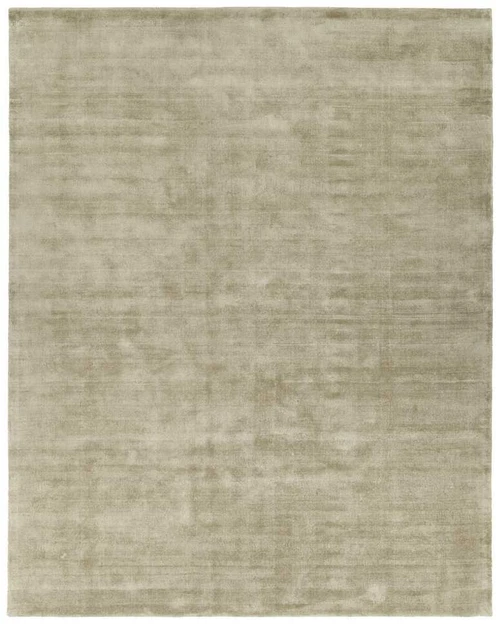
Traditional designs dyed or washed into a soft, unified tone such as gray, blue, or sand. The pattern becomes texture from across the room, so you get character without visual noise.
Updated Oushak and soft medallion
Large scale florals and medallions in muted ivory, sage, blush, and gold. This is the most classic end of transitional and pairs well with upholstered furniture and wood tones.
Kazak and tribal inspired
Bold geometric motifs from village rugs, recolored in neutrals. Couristan's hand-knotted Hamadan collection, which you will see in our grid, is a good example: a traditional Kazak design in camel, ivory, and silver.
Stripes, trellis, and linear patterns
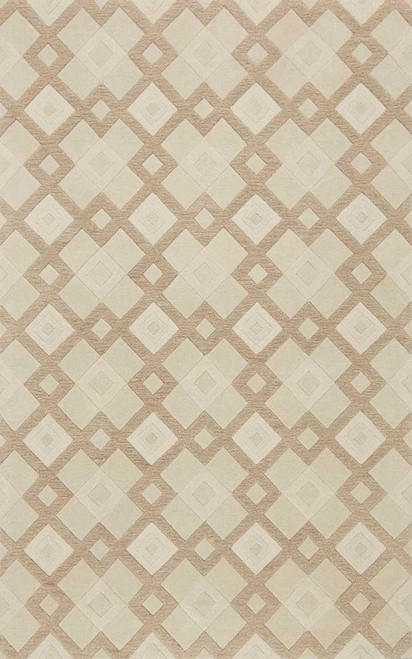
Classic geometric patterns with a tailored, current feel. Stanton's hand-loomed Shazia Stripe and Wayside's raised trellis Fisano sit right on the line between transitional and modern.
Abstracted florals
Traditional floral layouts loosened into painterly, impressionistic shapes. These are a beautiful bridge for clients who love florals but want the room to feel fresh.
How Transitional Rugs Are Made
Because transitional is a style rather than a construction, you will find it at every quality level. Here is how I explain the options:
- Hand-knotted. Each knot is tied by hand onto a woven foundation. It is the most durable construction and the one that ages most gracefully. Expect a longer lead time and a higher investment. Our guide on why area rugs are expensive explains what you are paying for.
- Hand-tufted. Yarn is punched through a backing with a hand tool, then sheared and backed. It offers a soft wool pile and rich color at a friendlier price, and it suits bedrooms and living rooms with moderate traffic.
- Hand-loomed. Woven on a hand-operated loom, often with a carved or high-low surface. You get a handmade texture with a cleaner, more tailored look.
- Flatweave. No pile at all, so it is easy to clean and lies flat under doors and dining chairs. Many flatweaves are reversible.
- Power-loomed. Machine woven, very consistent, and the most budget friendly. Quality power-loomed wool and performance synthetics can look remarkably refined in a transitional design.
Fiber matters as much as construction. Wool is the benchmark for living rooms, dining rooms, and offices because it is resilient, soil resistant, and forgiving. Performance synthetics such as nylon and polypropylene make sense where spills, pets, or sunlight are a concern. Our post on how to pick the right type of area rug compares them in detail.
How to Choose the Right Transitional Rug
Start with your palette
Transitional rugs live in muted, layered color: ivory, beige, gray, soft blue, sage, rust, and camel. Pull one or two colors from your upholstery, drapery, or art and look for a rug that carries them. If your room is mostly neutral, a rug with a little more color becomes the focal point. If your room already has pattern on the sofa or windows, choose a quieter, tonal rug. Read how to pick the right colored area rug before you commit.
Match pattern scale to the room
A large scale pattern reads calm in a big room because the eye sees one gesture. A small, busy pattern in a large room can look like noise. In smaller rooms, a soft all-over pattern often works better than a strong center medallion that gets hidden under a coffee table.
Size it generously
Leave 12 to 24 inches of bare floor between the rug and the walls. In a living room, the front legs of every seat should rest on the rug at minimum. In a dining room, the rug should extend at least 24 inches past the table on every side so chairs stay on it when pulled out. My Complete Area Rug Size Guide and post on where an area rug should be placed walk through every room.
Be honest about traffic
A plush hand-tufted rug is lovely in a bedroom. An entry or family room with kids and pets wants a dense low pile, a distressed pattern that hides soil, or a performance fiber. Tell me how the room is really used and I will steer you toward something that still looks beautiful in five years.
For more ideas, see my 8 tips for buying transitional rugs and guide to decorating with blue transitional rugs.
Where Transitional Rugs Work Best
- Living rooms with mixed furniture. A transitional rug ties a traditional wing chair and a clean lined sofa into one conversation.
- Open floor plans. Use a coordinated family of transitional rugs to define the living, dining, and kitchen zones without matching them exactly.
- Dining rooms. A low pile or flatweave transitional rug lets chairs slide easily, and a distressed pattern forgives spills.
- Bedrooms. Soft, tonal transitional rugs make a restful foundation. Place the rug under the lower two-thirds of the bed so it extends past the sides and foot.
- Entries and hallways. Transitional runners carry a color story from room to room. Browse our runner rugs.
Transitional Rugs for Offices and Commercial Spaces
Transitional is the safest and most polished choice for many professional spaces. It feels established without feeling old, and it works with both traditional millwork and modern office furniture. A transitional wool rug in a reception area, executive office, or conference room signals care and permanence. Its muted palette also hides wear in high traffic zones. We size rugs to define seating groups and conference tables correctly, coordinate colors with your brand and interior, and source large and custom sizes for spaces standard rugs don't fit.
Custom Transitional Rugs
When your room needs a size no one stocks, or you want a specific color pulled from a fabric or paint chip, we can create a custom transitional rug. Options range from a program design, a pre-drawn pattern resized and recolored for your room, to a fully original design, plus broadloom cut and bound to an exact size. See our custom project gallery for real examples.
Caring for Your Transitional Rug
- Use a quality rug pad. It keeps the rug from creeping, cushions every step, and adds years of life. Our post on why your area rug needs a pad explains how.
- Rotate the rug once or twice a year so sun and traffic wear it evenly.
- Vacuum regularly, without a beater bar on hand-knotted and wool rugs.
- Blot spills right away. Never rub, which spreads the stain and distorts the pile.
- Consider ForceField protection for dining rooms and family spaces.
- Have wool rugs professionally cleaned every few years, rather than steam cleaned like wall-to-wall carpet.
My full guide on how to care for your area rug covers the rest.
See Transitional Rugs in Your Space
Because transitional rugs depend so much on subtle color, seeing them in your own light matters. Upload a photo of your room to our RoomVo room visualizer to preview participating rugs in your space, and request samples to check color and texture before you order the full size. For inspiration, browse our area rug ideas gallery.
Why Work With Rug Goddess on a Transitional Rug
- 25+ years of specialized expertise. Area rugs are all we do, so you get judgment no furniture store or big box retailer can offer.
- Honest guidance. I will tell you when a power-loomed rug serves you just as well as a hand-knotted one, and when it does not.
- Exclusive brands. Jaunty, Stanton, Prestige Mills, Calvin Klein, Kaleen, Momeni, Couristan, Nourison, Jaipur Living, KAS, Trans Ocean, and Wayside.
- Custom capability. Any size, any shape, any color story.
- Personal follow-through. I stay in contact with you from first conversation through delivery. Our client testimonials say it best.
- Home and office, nationwide. In-home consultations in the Tampa Bay and Central Florida and Kansas City areas, virtual consultations everywhere else. Here is why clients buy from Rug Goddess.
Related Reading
Frequently Asked Questions About Transitional Rugs
What is a transitional rug?
A transitional rug blends traditional and modern design. It keeps classic elements such as medallions, florals, or borders but updates them with a muted palette, a washed or distressed finish, a larger scale, or a simplified layout. The result works with both classic and contemporary furniture, which makes transitional the most versatile rug style.
What is the difference between a transitional rug and a traditional rug?
A traditional rug uses historic patterns in rich, saturated colors and formal layouts. A transitional rug starts from those same patterns but softens them with lighter or tonal colors, distressing, or a simplified design. Traditional reads formal and classic. Transitional reads relaxed and current while still feeling warm.
What is the difference between transitional and contemporary rugs?
Contemporary rugs use abstract, geometric, or purely textural designs with no historic reference. Transitional rugs keep a recognizable traditional motif and update it. If you can still see a medallion, floral, or Persian layout in the design, the rug is transitional.
What colors are common in transitional rugs?
Transitional rugs favor muted, layered colors: ivory, beige, gray, soft blue, sage, camel, and faded rust. Many use tonal or overdyed palettes so the pattern reads almost as texture. Choose one or two colors already in your room and look for a rug that carries them rather than matching everything exactly.
Do transitional rugs go with modern furniture?
Yes, that is their strength. A transitional rug adds warmth and a sense of history under clean lined modern furniture without making the room feel formal. A washed Oushak or distressed Persian design beneath a sleek sofa is one of the most reliable combinations in interior design.
Are transitional rugs in style?
Yes. Transitional design has been one of the most popular interior styles for years because it is flexible rather than trendy. Vintage-look, washed, and softly patterned rugs continue to lead current trends, and a well chosen transitional rug adapts as you change pillows, paint, and furniture over time.
What size transitional rug do I need?
Leave 12 to 24 inches of bare floor between the rug and the walls. In a living room, at least the front legs of all seating should sit on the rug. In a dining room, the rug should extend at least 24 inches beyond the table on every side. An 8 x 10 or 9 x 12 fits most living rooms.
What is the best material for a transitional rug?
Wool is the best all-around choice because it is resilient, naturally soil resistant, and holds color beautifully. For homes with pets, heavy traffic, or lots of sun, a performance nylon or polypropylene transitional rug is easier to clean. Natural jute and sisal blends add texture for a casual look.
Are transitional rugs good for high traffic areas?
Many are excellent in high traffic. Distressed and multi-tonal patterns hide soil and wear far better than solid rugs. For entries, family rooms, and offices, choose a dense low pile, a flatweave, or a performance fiber, and add a quality rug pad to extend the life of the rug.
Is a transitional rug a good choice for an office?
Yes. Transitional rugs feel established without feeling dated, so they suit reception areas, executive offices, and conference rooms. Their muted palettes coordinate easily with brand colors and hide wear from steady foot traffic. Wool constructions perform especially well in professional settings.
Can I mix a transitional rug with other rug styles?
Yes. Transitional rugs are the natural bridge between rooms. In an open floor plan, a transitional rug can sit between a traditional dining room rug and a modern living room rug by sharing a color with each. The rugs should relate through color or texture without matching exactly.
Are hand-knotted transitional rugs worth the investment?
For rooms where you want a rug to last decades, yes. Hand-knotted wool rugs are the most durable construction and age gracefully, often looking better over time. For a rental, a playroom, or a room you plan to redecorate soon, a quality hand-tufted or power-loomed rug is the smarter value.
Can I get a custom size transitional rug?
Yes. We create custom transitional rugs in virtually any size and shape, including oversized rooms and non-standard dimensions. Options include resizing and recoloring a pre-drawn program design, a fully original design, or a quality broadloom cut and bound to your exact measurements.
How do I clean a transitional rug?
Vacuum regularly, avoiding the beater bar on wool and hand-knotted rugs, and blot spills immediately rather than rubbing. Rotate the rug once or twice a year for even wear. Have wool rugs professionally cleaned every few years. A fabric protector such as ForceField makes everyday spills much easier to manage.
How do I choose the right transitional rug for my room?
Start with a consultation. I will look at your furniture, colors, light, and traffic, then narrow thousands of options to a few that fit your room and budget. Choose an in-home visit in Tampa Bay, Central Florida, or Kansas City, or a virtual consultation anywhere. Your consultation fee is credited toward your rug.
Let's Find Your Transitional Rug Together
A transitional rug should make your room feel finished, warm, and current all at once. Preview options in your own space with our RoomVo room visualizer, then schedule an in-home consultation or a virtual consultation, whichever works best for you. Your consultation fee is credited toward your rug. You can reach me at 1-800-481-1572, in Tampa at 352-503-9410, in Kansas City at 913-481-4577, or by email at janice@ruggoddess.com. I will stay with you every step of the way.